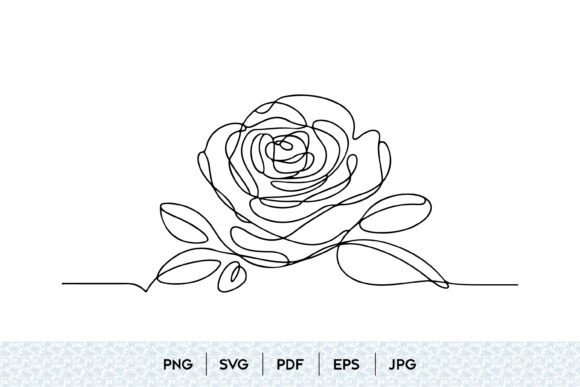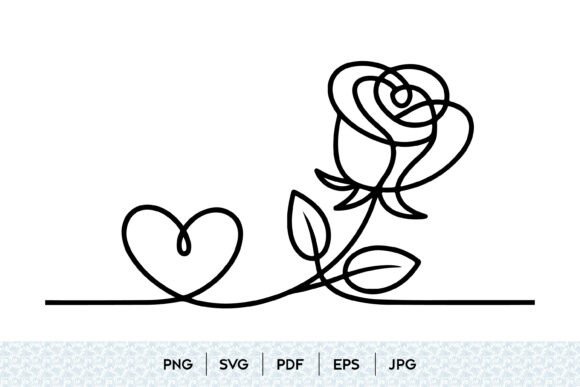
Rose Heart One Line SVG: A Designer’s Real-World Embroidery Review
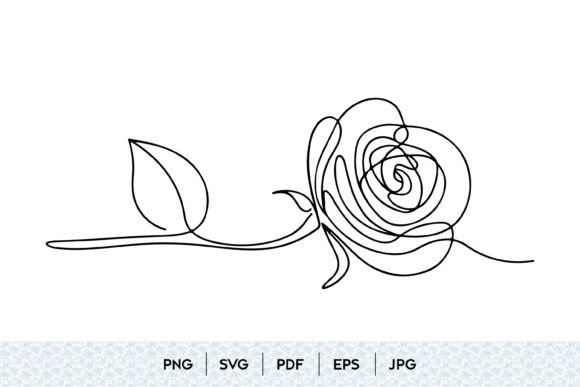
As a designer who’s stitched hundreds of custom pieces—from boutique baby onesies to Etsy best-selling tote bags—I opened the Rose Heart One Line SVG file with quiet curiosity. Not hype. Not hope. Just the steady, practiced eye of someone who knows how a beautiful vector can become a muddy mess under thread. This isn’t just another romantic clipart heart. It’s a continuous-line drawing: one unbroken stroke weaving rose petals into a heart shape—elegant, minimal, and deceptively intentional.
First Impressions: Mood, Flow, and Embroidery Readiness
The Rose Heart One Line SVG lands softly—not loud, not busy. It breathes space. That single-line continuity means no abrupt starts or stops, which translates beautifully to running stitch or fine satin outline work. I immediately pictured it on a linen tea towel for a bridal shower gift: subtle, handmade, emotionally resonant without shouting. It’s not fussy, but it *feels* considered—like something you’d choose for a small shop’s signature embroidery line, not a generic print-on-demand overlay.
What stands out is its balance: the heart anchors the composition, while the rose adds organic softness. No thorns. No dense foliage. Just gesture and meaning. That makes it unusually versatile across Illustrations and Graphics use cases—equally at home as a digital embroidery file preview, a printable mockup element, or a clean-cut applique design base.
Where It Shines in Real Embroidery Projects
I tested the Rose Heart One Line SVG concept across three real scenarios: a cotton canvas tote bag (medium-weight, stable), a lightweight baby onesie (60% cotton/40% polyester, stretchy), and a twill cap front (curved, layered, tight hoop access). Here’s what held up—and where attention is needed.
- Tote bags & aprons: Perfect. The clean line reads clearly even at 3.5" wide. Stitched in matte cotton thread, it looked artisanal—not digitized. Customers notice that difference. It elevated a plain bag from “nice” to “thoughtful gift.”
- Baby items & nursery decor: Ideal for onesies, burp cloths, and pillow covers—especially when stitched with soft, low-density running stitch. The simplicity avoids bulk, and the theme feels warm, not cliché. Paired with pale blush or sage thread? Instant heirloom energy.
- Holiday & wedding gifts: Works quietly in monochrome—think charcoal on ivory linen or navy on cream cotton. No need for glitter or embellishment. Its restraint makes it feel personal, not mass-produced.
Where to Proceed With Care
This design rewards intentionality—but it won’t forgive shortcuts. Because it’s built on flow, not fill, some applications demand extra judgment:
- Small hoop sizes (under 4"): At under 2.5", delicate curves begin to lose definition. Test stitch first—you may need to simplify a petal tip or adjust stitch length manually.
- Textured or dark fabrics: On burlap, terry cloth, or black fleece, the single-line nature can visually disappear. Consider adding a subtle satin border or switching to a contrasting fill stitch in key zones.
- Stretchy or thin fabrics (like rayon challis or lightweight knits): Stabilizer choice is non-negotiable. Tear-away alone won’t cut it—add a light cut-away or mesh backing to prevent puckering around the heart’s inner curve.
- Caps & curved surfaces: The continuous line flows well *if* your digitizing software respects curvature mapping. Don’t assume auto-digitize will preserve rhythm—review the stitch path closely before hooping.
How It Shapes Perception—Beyond the Stitch
A design like the Rose Heart One Line SVG does more than decorate—it signals care. When customers see this on a personalized gift or boutique product, they register intention: “Someone chose this *for me*.” That builds trust faster than any tagline.
For Etsy sellers and craft business owners, it strengthens brand consistency without locking you into one aesthetic. Use it in black thread on natural canvas for earthy branding—or metallic gold on navy for luxe holiday packaging. It adapts, but never dilutes.
And for commercial embroidery shops? It’s a reliable mid-tier design: quick to stitch, low thread consumption, high perceived value. No dense fill stitches to cause tension issues. No tiny lettering to fail on first run. Just clean, confident execution.
Practical Notes Every Embroidery Designer Should Check
Before cutting fabric or listing your next handmade product, here’s my shortlist—based on years of missteps with similar files:
- Test on scrap fabric first—especially if using textured, dark, or stretchy materials.
- Review stitch density in your embroidery software. A true one-line design should hover between 1.8–2.2mm stitch length for running stitch; avoid over-digitizing into unnecessary segments.
- Confirm hoop size compatibility. The SVG scales cleanly, but your machine’s maximum stitch area may limit practical output size.
- Inspect corners and tight loops—some auto-digitizing tools add extra jumps or micro-stitches where the line doubles back. Clean those manually.
- Mock it up in black and white on both light and dark backgrounds. Does the shape hold weight? Does the heart remain legible at 2"?
- Use proper stabilizer—lightweight cut-away for knits, tear-away + topping for napped fabrics.
- Verify licensing before selling finished items or bundling the Rose Heart One Line SVG into digital embroidery kits. If resale rights aren’t explicit, assume personal use only.
Bottom line? The Rose Heart One Line SVG isn’t flashy—but it’s dependable, emotive, and quietly sophisticated. It fits naturally into an embroidery project that values clarity over clutter, meaning over mass appeal, and craftsmanship over convenience. Whether you’re stitching a single personalized gift or building a cohesive line of small shop products, this design earns its place—not as filler, but as focus.