Minimalist Giraffe Line Art SVG: Graphics & Illustrations for Local Branding
As a brand designer who’s developed visual identities for over 30 local businesses—from artisanal candle studios in Portland to organic baby skincare brands in Asheville—I recently evaluated the Minimalist Giraffe Line Art SVG for a real-world project: rebranding a children’s boutique that sells handmade wooden toys and eco-friendly apparel. My goal wasn’t just to find “cute clipart.” I needed a graphic design asset that could carry weight across packaging, social media, and in-store signage—without diluting brand clarity or professionalism.
A First Impression That Speaks Before You Do
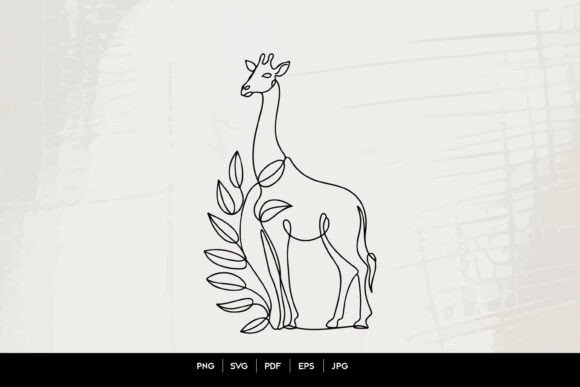
The Minimalist Giraffe Line Art SVG lands with quiet confidence. It’s not cartoonish, not overly stylized, and definitely not cluttered—it’s a single-weight, unbroken contour line that traces the giraffe’s silhouette with gentle rhythm and subtle asymmetry. That small imperfection? It reads as hand-drawn intention, not digital laziness. The mood is warm, approachable, and quietly intelligent—ideal for brands rooted in care, curiosity, or gentle playfulness. Think: a Montessori-aligned toy shop, a botanical baby lotion line, or a slow-fashion kids’ clothing label. It suggests organic modernity—not sterile minimalism—and avoids the coldness that can creep into overly rigid vector illustrations.
Where This Graphic Design Asset Earns Its Keep
In practice, the Minimalist Giraffe Line Art SVG shines where local business branding needs both recognition and restraint:
- Product labels: Works beautifully on kraft paper soap tags or matte-finish candle jars—especially when paired with a soft serif or clean sans-serif typeface.
- Packaging accents: A single giraffe outline along the bottom edge of a gift box adds personality without competing with product photography or essential copy.
- Hero graphics for social media: Scales flawlessly from Instagram Stories to Pinterest pins; its clean lines hold up even at thumbnail size.
- Printable inserts and thank-you cards: The included PDF and high-res PNG ensure crisp printing on recycled cardstock—no pixelation, no jagged edges.
- Seasonal campaign visuals: Tinted in sage green for spring launches or terracotta for fall collections, it adapts without losing identity.
Used thoughtfully, this illustration strengthens visual hierarchy—guiding the eye toward your product name or call-to-action—not away from it. It also supports stronger customer trust: consistent, well-executed graphics signal attention to detail, which consumers subconsciously equate with product quality.
Real Packaging, Real Constraints: Where to Lean In—and When to Pause
This isn’t a one-size-fits-all decorative element. I’ve seen small business owners accidentally undermine their credibility by misplacing it. Here’s what works—and what doesn’t:
Use it confidently on: hang tags, sticker sheets, menu headers (for kid-friendly cafés), boutique window decals, product mockups for Etsy listings, and seasonal packaging wraps (e.g., limited-edition holiday soap sets).
Use it carefully—or avoid it—on: ingredient-heavy food labels (where space is tight and regulatory text dominates), legal disclaimers, luxury skincare packaging aiming for stark monochrome elegance, or any layout where the giraffe competes with critical information like net weight, certifications, or QR codes.
Practical Designer Notes You Can’t Skip
Before locking in the Minimalist Giraffe Line Art SVG for client work or your own product line, run these checks:
- Test it on actual packaging mockups—not just screen previews. Does it read clearly on curved surfaces or textured substrates?
- Convert it to grayscale and print it. Does the line weight hold up on uncoated paper? Is it legible at 12mm height on a tea bag tag?
- Overlay it on your brand color palette. Does it retain contrast against cream, charcoal, or mint? Avoid relying solely on RGB previews—test CMYK output too.
- Compare it beside your top three competitors’ packaging. Does it help you stand out—or blend in?
- Inspect the SVG file in Illustrator or Figma. Are anchor points clean? Can you adjust stroke width or isolate the head/neck if needed for custom layouts?
- Test typography pairings: try it beside a warm serif (like Playfair Display), a friendly sans (like Poppins), a delicate script (like Pacifico), and a bold display font. Which pairing feels most authentic to your brand voice?
- Verify commercial licensing. Even if purchased from a creative marketplace, confirm it permits use on physical products, resale items, and digital marketing assets—especially for client projects.
More Than Clipart—A Strategic Brand Identity Tool
What separates the Minimalist Giraffe Line Art SVG from generic safari animal clipart is its intentional restraint. It doesn’t shout. It invites. That makes it unusually versatile across editorial design, web design, and packaging design—especially for handmade businesses that need warmth without whimsy, distinction without distraction.
For a local florist launching a “Savanna Bloom” dried flower subscription, it became the subtle watermark on shipping labels and the focal point of a limited-run greeting card series. For a coffee roaster introducing a single-origin “Giraffe Blend,” it anchored the bag design—paired with earthy typography and a muted ochre background—giving shelf appeal that felt curated, not cluttered.
When chosen with purpose—not just because it’s “available”—this illustration becomes part of your brand identity’s quiet language: a visual shorthand for curiosity, gentleness, and grounded joy. And in a crowded local market, that kind of resonance doesn’t just look good—it builds loyalty.