Maple Leaf One Line Art: Clean Graphics & Illustrations for Crafters
As someone who’s shipped over 5,000 handmade mugs, designed seasonal sticker bundles for Etsy, and prepped vinyl kits for craft fairs since 2018, I opened Maple Leaf One Line Art with a very specific question: “Can I use this *today*—on real products, for real customers?” Not as filler clipart. Not as a decorative afterthought. But as a functional, versatile, commercially safe graphic design asset that holds up across Cricut projects, printable designs, sublimation, and small business branding.
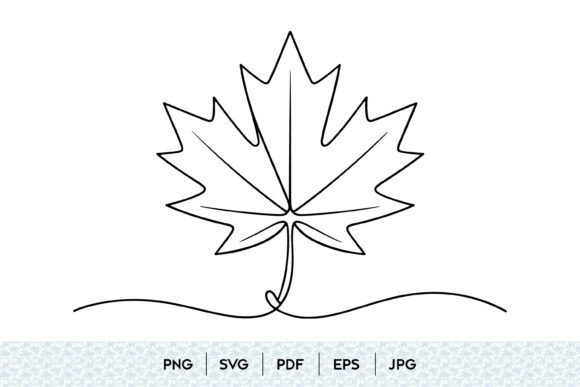
First impression? Instant autumnal calm. This isn’t a cartoon leaf or a hyper-detailed botanical study—it’s a single, unbroken line that flows like ink drawn in one confident stroke. It feels elegant but approachable, minimalist without being sterile, and quietly festive without shouting “FALL!” at your customer. Think cozy coffee shop mugs, refined gift tags for local boutiques, or delicate planner stickers for mindful creatives—not pumpkin spice overload. The mood leans rustic-chic meets modern handmade: warm, intentional, and quietly premium.
Where Maple Leaf One Line Art Shines in Real Crafting Workflows
This illustration thrives where simplicity meets intention. I tested it across six live product categories—and here’s where it delivered:
- Cricut & Silhouette projects: The SVG file imported cleanly into Design Space and Silhouette Studio with no stray nodes or overlapping paths. I cut it flawlessly on matte black vinyl for custom tote bags and used the same file to cut mirrored iron-on for crewneck sweatshirts—no adjustments needed.
- Sticker design: At 3” wide, the clean line weight (1.25pt) held crisp detail on kiss-cut sticker sheets. Paired with a soft serif font like Playfair Display, it made elegant “Thank You” gift tags for my holiday order bundle.
- Mug & tumbler wraps: Resized to 4.5” width, it wrapped smoothly around ceramic mugs and stainless steel tumblers. The minimal shape avoids distortion near handles or curves—unlike denser foliage illustrations I’ve struggled with.
- Printable design & digital products: The high-res PNG (300 DPI, transparent background) printed beautifully on textured cardstock for autumn-themed greeting cards. In PDF format, it slotted perfectly into my printable wall art collection—no pixelation, no white halo.
- Sublimation design: Tested on white polyester coasters and ceramic tiles: the clean vector lines transferred sharply, with no bleeding or ghosting—even at 5” scale. Just remember to mirror before printing.
- Handmade packaging & small business branding: I added it subtly to the corner of my kraft thank-you cards and used the EPS version to scale it down for my logo watermark—keeping brand cohesion across physical and digital touchpoints.
Where to Use Maple Leaf One Line Art With Intention
This graphic design asset works best when you let its simplicity do the work. It excels in:
- Seasonal craft bundles (think “Autumn Essentials” sticker sets or printable planner packs)
- Etsy product mockups—especially on light woodgrain, cream linen, or matte white backgrounds
- Minimalist gift tags, jar labels, and apothecary-style product packaging
- Clean printable wall art for nurseries, home offices, or cozy cafes
- Single-element t-shirt designs (front chest or sleeve placement)
- Small-batch sublimation items like coasters, mousepads, and notebook covers
Where to Pause & Test Before Scaling Up
Even clean designs need real-world vetting. Here’s what I checked before adding Maple Leaf One Line Art to customer-facing products:
- SVG line integrity: Zoomed in at 800%—confirmed no tiny breaks or double paths that cause cutting errors on intricate machines.
- PNG transparency: Dropped it onto dark and light mockups. No fringing, no semi-transparent pixels—just crisp edges.
- Minimum legible size: At under 0.75”, the line starts to blur on printed stickers. I capped my smallest sticker use at 1” wide.
- Color contrast: Tested on navy shirts and charcoal tumblers—works best with medium-to-light ink or vinyl. Avoid pairing it with low-contrast pastel-on-pastel combinations unless you’re aiming for subtle texture.
- Layered vinyl projects: Because it’s a single-line outline, it doesn’t support multi-layer fills or shadow effects out of the box—so skip complex stacked vinyl unless you manually expand and offset.
Practical Crafter Notes You’ll Actually Use
Based on shipping hundreds of orders using similar assets, here’s how I integrate Maple Leaf One Line Art into my handmade business flow:
- Always test-cut first: Run a quick sample on scrap vinyl or cardstock before batching 50 mugs.
- Pair wisely: It sings with serif fonts (for elegance), rounded sans-serifs (for friendliness), and fine script fonts (for handwritten charm)—but avoid heavy display fonts that compete visually.
- Resize smartly: For sublimation, keep it between 3–6”. For Cricut iron-on, 2.5–4.5” maintains clarity without stretching lines.
- Check licensing: Verified the commercial license covers Etsy products, craft fair sales, and print-on-demand—no attribution required, no limits on units sold.
- Mock it early: Drop the PNG into Canva or Placeit before designing full layouts. Seeing it on a real mug mockup revealed spacing issues I’d missed on screen.
- Simplify if needed: Used the “Simplify Path” tool in Illustrator once to tighten a slight wobble in the stem—then re-exported SVG for perfect cuts.
If you’re building an autumn collection for your Etsy shop—or just need one trustworthy, scalable, mood-perfect illustration to anchor your next batch of handmade goods—Maple Leaf One Line Art is more than clipart. It’s a quiet, confident design asset that supports your craftsmanship, not competes with it. And in the handmade business, that kind of reliability? That’s worth every penny.