Coastal Beach Scenes: Vector Line Art Graphics & Illustrations
First Impression: Clean, Calm, and Instantly Recognizable
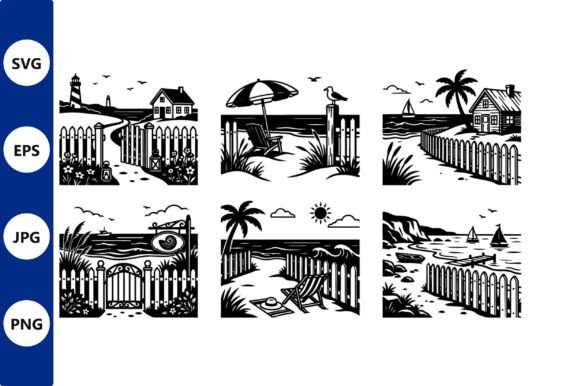
When I opened Coastal Beach Scenes in Vector Line Art, my first thought wasn’t “beachy”—it was “intentional.” This isn’t a cluttered tropical collage or a watercolor wash. It’s a black and white vector collage of coastal scenes featuring fences, huts, umbrellas, palm trees, and boats—rendered in clean line art style with high contrast. The mood is relaxed but precise; nostalgic yet modern. It evokes slow mornings, seaside retreats, and mindful simplicity—not party energy or resort luxury. That makes it ideal for lifestyle brands, wellness coaches, small-batch makers, and creative entrepreneurs building a calm, confident brand identity.
A Real Campaign Test: Launching a Summer Content Kit for Coastal Wellness Coaches
Last month, I helped a small business launch a digital product: a printable summer content kit for coastal wellness coaches—think guided journal pages, Instagram story templates, and Pinterest-optimized quote graphics. We needed marketing visuals that felt cohesive, professional, and emotionally resonant—without requiring custom illustration work. Coastal Beach Scenes in Vector Line Art became the unifying visual thread. Its high-contrast line art scaled flawlessly across PDFs, Canva templates, email banners, and social media graphics. More importantly, it didn’t compete with text or overwhelm the message—it supported it.
Where It Strengthens Brand Communication
This graphic design asset delivers real value across multiple touchpoints:
- Brand identity: Works beautifully as a secondary pattern or border element—especially when paired with soft neutrals or ocean-inspired palettes.
- Packaging design & product labels: Adds subtle thematic texture to kraft paper boxes, tea tins, or candle jars without muddying legibility.
- Social media graphics: Serves as elegant background accents for Instagram posts, Facebook ads, and Pinterest pins—enhancing visual hierarchy without sacrificing clarity.
- Digital ads & web design: Performs well in hero sections and campaign headers where mood matters more than detail.
- Editorial design & lead magnets: Gives blog graphics, media kits, and downloadable resources an elevated, curated feel—boosting audience trust through consistent, professional branding.
- Printable design & merchandise: Prints crisply on stickers, tote bags, and workshop handouts thanks to its SVG and PNG scalability.
Marketing Goals It Helps Achieve—Without Extra Work
Using Coastal Beach Scenes in Vector Line Art supports seven core marketing goals:
- Stronger first impression: Its confident line weight and balanced composition signal professionalism before a single word is read.
- Clearer visual hierarchy: High contrast ensures it frames—not fights—your headline or CTA.
- More consistent branding: As part of a design bundle, it anchors seasonal campaigns with recognizable visual language.
- Better product presentation: Especially for digital products, it adds tactile warmth to otherwise flat interfaces.
- Improved audience trust: Clean, intentional illustrations suggest care—critical for small business branding.
- Stronger recognition: Repeating the same line art motif across channels builds subconscious familiarity.
- More memorable campaign visuals: Unlike generic stock photos, this creative design stands out in crowded feeds.
Best Places to Deploy This Design Asset
It shines brightest in these contexts:
- Hero graphics for summer-themed landing pages
- Campaign headers for email newsletters and digital ads
- Branded Canva templates (social posts, stories, Pinterest pins)
- Social media covers and profile accents
- Packaging inserts and thank-you cards
- Content bundles and printable promotions
- Decorative brand elements—like divider lines in blog layouts or subtle watermark patterns
Where to Use It Thoughtfully
This isn’t a one-size-fits-all illustration. Exercise restraint in these scenarios:
- Formal corporate branding: Its relaxed tone may clash with finance, legal, or B2B tech identities.
- Dense information layouts: Avoid placing it behind paragraphs or data tables—it’s not a background filler.
- Small mobile graphics: Some details (like fence slats or umbrella ribs) lose definition below 150px width—test readability early.
- Low-contrast backgrounds: On light gray or beige, the black lines can appear washed out. Always preview on intended backgrounds.
- Overly minimal brands: If your aesthetic relies on negative space and ultra-thin strokes, this bold line art may feel heavy.
- Text-heavy ads: Let it frame—not accompany—your copy. It’s a mood-setter, not a supporting actor.
Practical Brand Designer Notes You’ll Actually Use
Before finalizing any campaign, I run these checks:
- Test it with your brand color palette: Does it hold up beside your primary and secondary hues? Try overlaying a 10% tint of your accent color.
- Check black and white usage: Since it’s monochrome, verify how it reads when inverted (white-on-black) for dark-mode designs.
- Place it inside real campaign mockups: Drop it into a Canva template, email builder, or packaging prototype—not just a blank artboard.
- Preview on mobile screens: Zoom out to 33% view. Does the rhythm of lines still feel intentional?
- Compare against competitor visuals: Does it differentiate—or blend in too easily?
- Pair it with fonts: It balances beautifully with serif (for editorial warmth), sans serif (for modern clarity), and even restrained script fonts—but avoid pairing with overly decorative display or handwritten fonts.
- Review spacing and balance: Give it breathing room. Line art gains power from negative space—not crowding.
- Confirm commercial license: Always verify licensing terms before using in client work, paid ads, or digital product visuals—this is essential for ethical, scalable creative marketplace use.
Final Takeaway: A Strategic, Not Just Stylistic, Choice
Coastal Beach Scenes in Vector Line Art isn’t just another clipart download. It’s a versatile, mood-driven graphic design asset built for real-world marketing constraints—scalability, consistency, emotional resonance, and commercial viability. For brand owners, bloggers, and creative entrepreneurs who need fast, professional-looking visuals without sacrificing authenticity, it’s a rare find: modern design that feels human, flexible enough for digital ads and printables alike, and thoughtful enough to earn audience trust. When used intentionally—as part of a broader visual strategy—it doesn’t just decorate your content. It deepens it.